Today in History
new fiction by Lori Barrett
Today in History
You pass chain shoe stores, drug stores, and fast food restaurants on your way to the amusement park meant to recreate The Olde Country. Your palms stick to the steering wheel of the Plymouth handed down from your grandfather because he ate bananas while driving. When old growth trees replace the strip malls on the side of the road, you enter the employee parking lot.
Most of your college classmates have internships this term, the spring before senior year. As an anthropology major, you opted for this minimum wage job instead of unpaid work at a museum or archive. A little pay is better than no pay. Plus, a season in the kaleidoscopic mix of European colonies and cities could be considered fieldwork, could reveal a thesis topic.
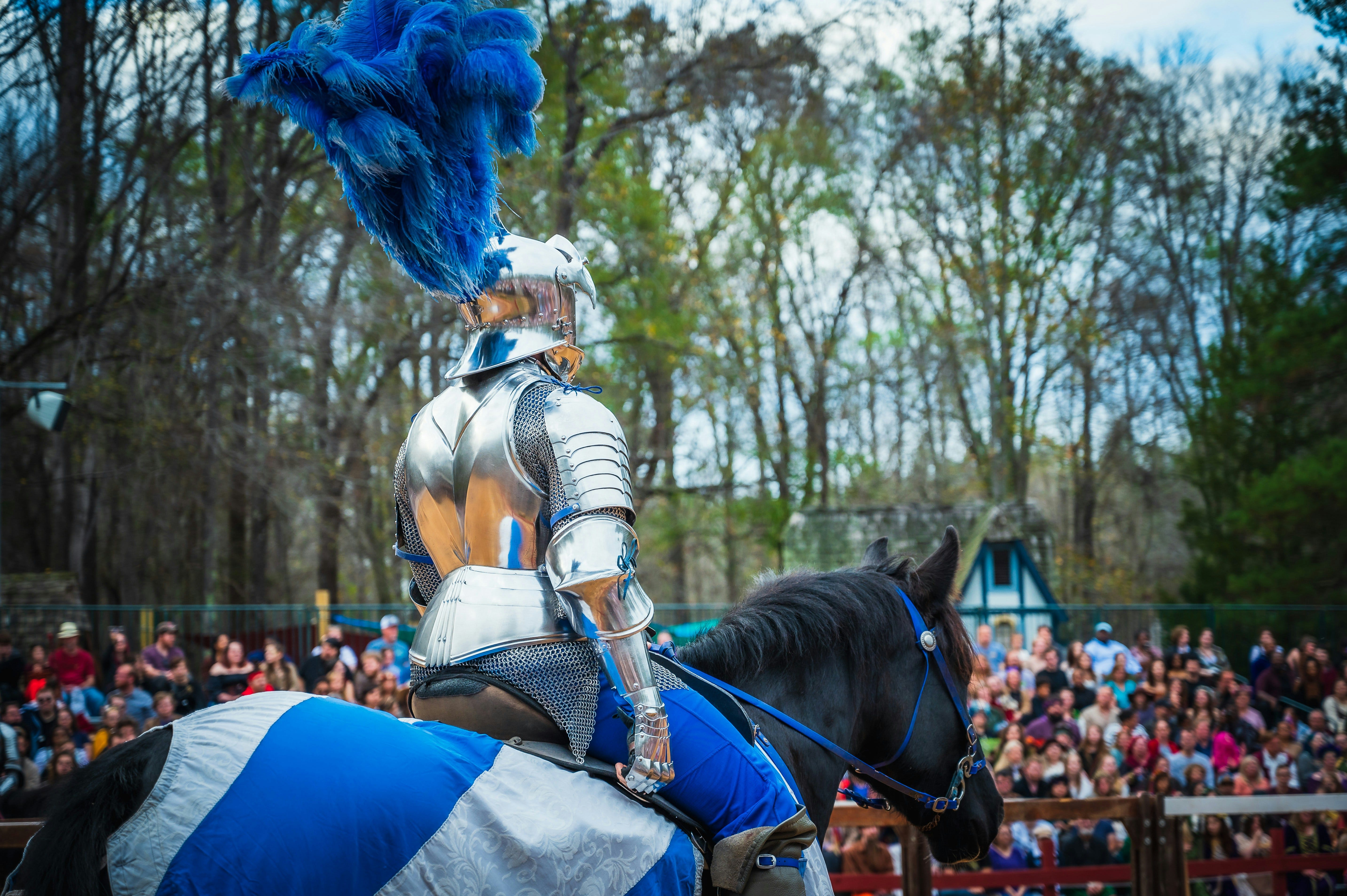
You tie an apron over a brown skort that falls to your knees and a brown and gold lace-up tunic, some corporate executive’s idea of a medieval peasant costume. At an in-house bank you pick up a plastic pouch heavy with rolls of quarters and follow the employee walkway through the Nottingham Forest. In your head you sing “Oo-De-Lally” from the animated Robin Hood.
It takes a lot of rules to make the park run smoothly and fulfill its promise of family fun, safety, and fairness: never leave your station unattended; no open-toe shoes; no facial hair; smile; make eye contact; never argue with an unhappy guest.
You spend the morning wandering around an arcade making change. You can name every game by the beeps and melodies. Don’t need to see ghosts or donkeys or spaceships. Instead you observe the teen population. They’re pale like they have the plague. Addicted to strategy and adrenaline, unlike the teens lining up for rollercoasters. That group is addicted to the adrenaline fix they get when their bodies succumb to gravity, a quickly passing high. Gamers will conquer America, you decide.
For lunch you meet up with a friend who works on the canal boat ride in Olde Venice.
“I feel like I’m at a county fair,” she says as the two of you wander among food stalls that sell corn dogs, hamburgers, pizza, and frites topped with mayonnaise and salsa at the same time. “This place smells like a deep fryer. History has no meaning.”
“Sometimes populations skip stages of evolution by borrowing from other cultures,” you point out.
“Shut up. I just want to eat something normal.”
You both take pretzels and cheese dip you can barely afford back to the breakroom.
“Want to go?” you ask your friend, pointing to a sign advertising a chance to earn extra money on a day when the park is closed. Repairs to newly acquired gaming equipment it says. No experience necessary.
“Why would new equipment need to be repaired?” your friend asks.
“Why turn down a chance for extra income?” you reply.
You agree to go together.
You enter the park in your friend’s car on the day of repairs. Instead of parking in the employee lot you drive on park walkways.
“It feels like a different place without the tourons,” says another coworker, from the Burger Basilica, using a term coined by the employee newsletter. It combines tourist and moron. You took home the newsletter when you saw it; considered using it to write about whether or not behavior can be culturally patterned.
You pass the sign announcing the park’s mission of family fun, safety, and fairness. It takes a lot of rules to make that happen: nametags must be visible; know where restrooms are located; no chewing gum; the use of deodorant is required.
You pull up to a warehouse outside Olde Aquitaine, next to the chateau where guests drink cheap champagne and play games.
“You three start in here,” says a woman employees call Marie Antionette because she’s management and doesn’t interact with park guests. She points to a game stall festooned with stuffed blue dogs and pink horses. Along one wall empty cans are stacked in towers of ten. Parkgoers pay for three beanbags they toss at the cans. Marie instructs you to cut open the beanbags and take four beans out of each, then sew them closed again.
You lounge on the supply of giant stuffed animals and get to work. You start singing “Oo-De-Lally” again. Marie Antionette scowls. Your weeks here haven’t brought you any closer to a thesis topic. The culture you’ve experienced is corporate. The thing you’re learning is how the desire for money sours and fun and fairness.
You move on to the basketballs, letting a small amount of air out of each. Then the hula hoops, cutting a few inches off and closing them back up.
It’s nearly dark when you leave. You drive back through the Tudor Shoppes and King Arthur’s Castle, then past the Loch Ness and Olde Hastings. Back to the modern world of strip malls and chain stores. Not much has changed since Marie Antionette ran her country into poverty, you think. You get out at the library and climb back in your own car and place your hands on the steering wheel, touching the residue of your grandfather’s rushed commute.
Lori Barrett is a writer and teacher in Chicago. Her work has appeared in Citron Review, The Pinch, Maudlin House, New World Writing and Little Engines. She’s an assistant fiction editor at Pithead Chapel. Find more of her work at LoriBarrettwrites.com.