
Interview with Rahul Mukerji

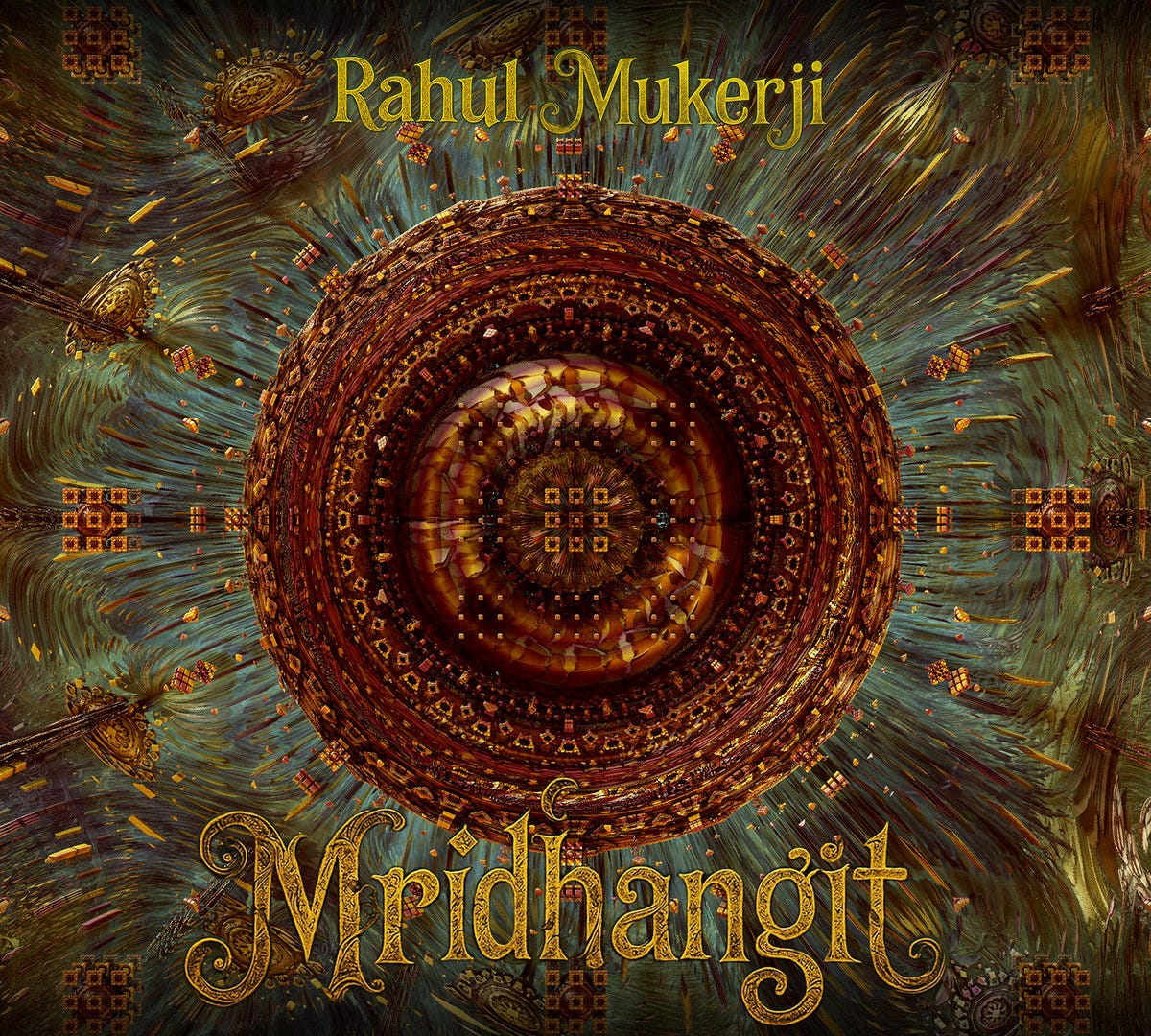
Rahul Mukerji recently released the anticipated follow-up to 2017’s Ma De Re Sha on March 26th. Mridhangit draws on his debut album and two smaller EP-sized soundtrack pieces to combine them into this delirious world of sound. Played very loudly, it harkens back to both traditional Indian classical music, ragas, progressive rock, metal, and too many other aspects to list. This was one of the most unique things I have heard in a long time, so I am thankful that Mukerji decided to answer a few questions I had regarding his project.
1. What inspired you to pursue a career in music? Did you grow up with music around you, or come from a musical family? What would be the spark that led to all of this?
Music has always been a part of my life. Both of my parents are casual musicians—they aren’t formally trained but often play at family gatherings and in small social circles. My dad plays harmonica and keyboards, while my mom learned the Hawaiian slide guitar and plays some keyboards. Growing up, I listened to Jim Reeves, Dolly Parton, and other artists, as well as the Top 40 hits. I taught myself how to play along on the keyboards without formal lessons. Later, I developed an interest in the electric guitar.
2. How did you become so proficient with multiple instruments?
I’ve always been fascinated by musical instruments, and I enjoy blending less familiar ones into my compositions. My curiosity about sound, timbre, and texture led me to discover instruments like the Chapman Stick, Handpan, and Oud. While creating music for film and theater, I realized these instruments could produce unique sounds. For example, I use an E-Bow on the Chapman Stick and apply shimmer delays and long-tail reverbs to Handpans to create ethereal ambience.
3. Explain the two soundtrack works that you created in the interim period between the albums. I am curious how you got involved in these projects. Did you know the cinematographer and director? How did they know about your music?
The two soundtracks originated from distinct projects I undertook for a Maryland-based theater company. Shortly after the release of my debut album, Ma De Re Sha, I performed as the opening act at a concert held by friends. Among the attendees were the Director and several others from the theater group, who had come to support my friend’s band. The Director was impressed by one of my compositions during the event and expressed interest in utilizing it for their upcoming play. This interaction led to my initial introduction to their team, which subsequently developed into a productive and longstanding collaboration. Over the years, I contributed to several projects with them, including the soundtrack work for the film Missi and the stage production Madhubala. I welcomed these opportunities, as they represented a departure from my usual repertoire and allowed me to diversify my portfolio. The creative challenge inherent in these projects was particularly rewarding.
4. How did you discover a lot of the other musicians that you play with on Mridhangit? Why a larger group of individuals for this project?
I have been an admirer of the band Pain of Salvation and had long aspired to collaborate on a project with Leo. My mix engineer, Brett, facilitated an introduction and noted that Leo’s experience with Indian music could be highly beneficial for my project. Additionally, I was familiar with Praveen Sparsh, who demonstrated versatility by performing in both traditional settings and working with electronic music and diverse genres. I contacted him to gauge his interest in contributing to the project. Due to the pandemic, recruiting other musicians involved extensive auditioning through online platforms. During quarantine, many artists offered their services via “work-for-hire” sites, which proved advantageous for assembling the team.
At the outset of Mridhangit, I made a deliberate decision to involve Leo and select others in the project. Unlike Ma De Re Sha, which was primarily a solo endeavor, this time I opted for a fully collaborative approach. The circumstances of quarantine supported and encouraged such collaboration. I was determined on moving beyond the scope of Ma De Re Sha and sought to push my boundaries with this release. Inviting musicians from across the globe ultimately proved to be an excellent strategy. I am extremely pleased with the outcome of the album and its favorable reception.
5. Are there any musicians out there who you feel are doing things like your work?
Yes, there are a lot of people who work in and around the same genre. Mekaal Hasan Band, Mattias IA Eklund’s work, Fareed Haque come to mind immediately. I do see a lot of fusion on my Instagram feed which is marvelous!
6. Do you think that you will ever include lyrics with your music, or do you prefer having everything instrumental to focus primarily on the sound itself rather than employing a narrative? I know you are somewhat familiar with poetry, at least as far as I can tell from your work on Madhubala.
I currently have music projects in progress that include vocal tracks; several forthcoming albums will not be purely instrumental. While I love instrumental compositions, I also create traditional rock and metal pieces that are built around vocal arrangements. I intend to seek suitable vocalists when the time comes to release these albums, as multiple collaborators may be required depending on the stylistic diversity of the songs.
7. You have a heavy focus on percussion throughout your whole project. Typically, how many percussionists are on the average track and how do you find them?
I enjoy the sound of ethnic percussion—African, Middle Eastern, Asian, and others—as they add unique grooves and timbres to music. I generally like layering percussion on top of drums. Usually, there’s just one additional percussion player per track, but sometimes I use several. For example, in the track Mridhangit, the song begins with the Mridangam, then halfway through it transitions to Tablas played by another musician. On Kalli Penn, a variety of instruments contribute to the percussion ensemble.
8. So far, you have focused mostly on the acoustic side of things, except for the electric guitar, etc. Do you think that you’ll ever incorporate synthesizers or anything of that nature into the mix?
Absolutely! I have some upcoming projects where synthesizers are heavily featured. I’ve played synthesizers through guitars using a MIDI guitar and various plugins, and I’ve collaborated with other keyboardists on these projects as well. Additionally, I find myself experimenting with quirky electronic instruments like ORBA, Otamatone, and others.
9. What are some of your favorite genres to include within a song? Is there anything that you haven’t done with the project that you hope to do in the future?
My standard go to genres are Progressive Rock and its elements, Post-Rock and Ambient elements. I do love a good breakdown section if the song is heavy enough. I have not composed pieces that include choirs, string sections, or a small orchestra. I would love to try my hand at that. The sound I would aim for would be closer to an Ayreon production than Metallica’s S&M.
10. Are you excited about the state of music right now? Why or why not? What is something you’d like to see more of?
The emergence of artificial intelligence has significantly transformed the music industry landscape. Previously, musicians faced challenges such as debates over the appropriateness of playback tracks during live performances and concerns about authenticity on social media platforms. Today, individuals can generate multiple AI bands and utilize AI bots for streaming, resulting in substantial financial gains, though some have been subject to scrutiny. There are times when the audience is unaware of the misleading setup, and unfortunately, there are times when they simply do not care. This shift has fundamentally changed the field of music, and it will be interesting to observe how both music and musicians adapt to these developments.
Several colleagues have begun organizing events focused exclusively on live music performed by local musicians, which is an encouraging trend. I hope more venues will continue to support live music and provide opportunities for authentic performances by skilled artists.