
Flowers For Juno – Kairos

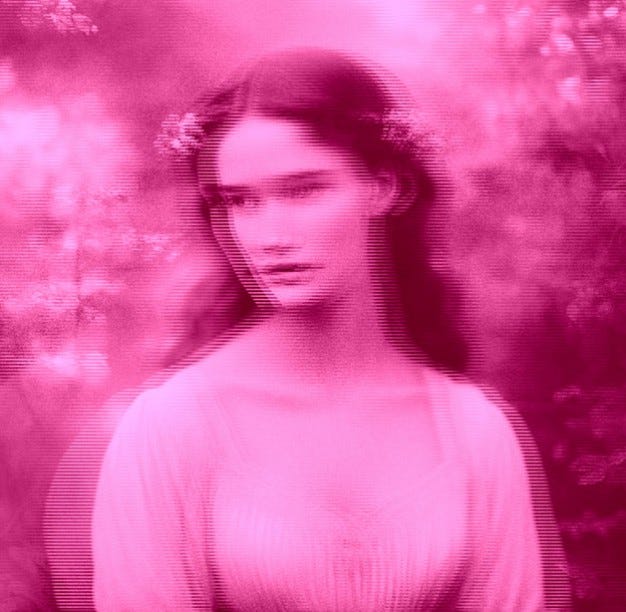
“Kairos” elevates Flowers For Juno’s sound into a pure stream of consciousness, immersing the listener in the infinite. Taken from the Greek, Kairos refers to the critical time. Given the Gothic Romantic leanings of the project, it makes sense that they’d take on this expansive, all-consuming term to capture the results of three-plus years of tinkering. Within the album, there are some of their earliest pieces, alongside covers of their influences and more recent releases. Interestingly, presenting all the releases in a unique, unpredictable order reveals that the abstracted elements of their most recent work were always there. However, the ego was slowly chiseled away, revealing a need for space, a need for distance. Heartbreak encourages this as well; the falling apart of relationships demands space. You can’t be near others when you feel that level of brokenness.
Reference points abound, and they vary depending on the period of the Flowers For Juno project. Earlier on, the Goth Rock aspects were much more front and center, think Bauhaus, Type O Negative (of which the vocalist is a dead ringer for Flowers For Juno’s Benjó James, down to the mournful baritone), and the sludge moments of early Alice in Chains. The shoegaze aspects are direct, such as with the Jesus and Mary Chain’s “Just Like Honey” alongside the near blown-out speaker damage of My Bloody Valentine’s “Loveless.” Much like those two groups, Flowers For Juno enjoy making the musical into something physical, as there is a heaviness behind even the kindest, shortest interludes. For the more experimental set, aspects of the slowing-down of time in Leyland Kirby’s The Caretaker project. Additionally, Flowers For Juno and The Caretaker both hail from Northern England, so perhaps that sadness in the water and endlessly overcast skies promote a certain twisted creativity.
The approach to the material, all of which has previously been released, has a focus on what it would be like if this were a live gig. Already, James has an eye on devoting more time to music, something I always encourage because music needs to be experienced live to understand it better. With the sequencing, James takes on an interesting set list of everything, allowing the highs and lows to be explored equally. So you get ambient stretches alongside more immediately accessible hook-driven stuff. Plus, it also highlights that while James is the frontman, he is not the only person in the group. Slap bass by Tyrion “Bigfoot” Jackson (I mean, what’s Goth Rock WITHOUT slap bass, am I right?), Freja Crozier on Northumbrian harp, and Jack Wilson, Jack Reed, and Mark Crorigan also assist in critical areas. To further highlight the English roots, the Mags’ “Ugly Bitch” filters into the fray in an unexpectedly perfect way, serving as a sudden flashback to another era in music, when things were rawer, more visceral, and much more alive.
Like churning up the muck, the sheer force of will defines the opener “Electro Hippies.” A nice sample breaks up the otherwise dramatic slog through molasses. Synthesizers are set for the sky, trying to rise above the rest of the churn. Even the drums feel trapped in this dirge, eventually glitching into a totally different decade.
“Message to Lana” serves as a siren call. Vocals swim through the din. Wordless choirs rest on the periphery of the sound. It makes sense that James used to be a bartender given the inherent late-night drunken stumbling that this track embodies so perfectly.
Crack Dens deserve their own soundtrack. Far too often it is assorted random noises. I appreciate the due diligence that “Crack Den Blues” does in giving this historically underserved demographic the attention it deserves. We have all been there, perhaps not necessarily in crack dens, but being stuck in a groove. It hurts, yet the participant realizes it long after the fact. When you are in it, you are in it; nobody can warn you. One day you stumble in and stay for a while, depending on your motivation level.
Pastoral imagery gives way to yearning industrial might with the sweeping “Lipstick and Furs.” To their credit, they pull their punches until the listener has gotten up very close. From that moment on, the song becomes tectonic in weight, with only sparkling synthesizers glimmering with hints of light.
Utter madness takes hold of “Buckcherry Wrote a Song About Girls Like You.” Crazed and cacophonous, drum beats bounce off the walls. Vocals have this derogatory aspect, shouting demands. It negs the listener, showing a different side of how some people experience relationships, the ebb and flow of intensity.
Hazy days and nights collide as “I go to strip clubs but just for the music.” The sleaze is strong here. It perfectly aligns with the previous track’s demeanor and even flows like a part II of the experience, down to the language. Chords blast through in this religious, nearly mystical way.
Lust is at the center of “Dolphin Girl.” One of Flowers For Juno’s more optimistic tracks, it yearns for Dawn. Sometimes when somebody looks good in a bikini you need to tell them. That’s the thing friends do, and sometimes even more than friends do.
Glam rock filtered through Goth Rock, “Physical Culture – This Is Why I’m Single Mix” has an ego-driven tendency. A haunted Billy Idol delirium wafts through, feeling doubly refreshing. The party-like atmosphere feels warm and welcoming while it progresses, evolving slowly.
“It’s Not My Fault – This Won’t Get on the Radio Edit” strips away their distant tendencies to deliver an unwaveringly direct message. Everything has this forcefulness. Word choice is impeccable, highlighting the pleading nature of the verses.
Stripped-down grooves lend a late-80s flair to “You’re So Beautiful It Makes Me Sad – Original Sin Mix.” Flowers For Juno embraces Tones on Tail’s post-punk aesthetic. It has an inherent beauty, from the light guitar work, steady bass, and twinkling keyboards that occasionally pop up.
“Just Like Honey” features their only cover, this one of the majestic pacing of Jesus & the Mary Chain. His voice is suited to deliver each line perfectly. The reverb is done flawlessly, and they take the original’s spaced-out method to multiply the heft by ten.
Vocalizations echo in a vast, unknowable space on the vistas of “My Bloody Kisses.” Guitar work leans toward a shoegaze aesthetic, with melodies buried deep within waves of noise. For a song this abrasive, they manage to find a loveliness within it.
By far the most straight-ahead pop-friendly rocker in their whole discography is the driving pulse of “Without Love – 7” Deadly Sins Mix.” The song has righteous hooks, decipherable vocals, and rushes through in a bright, brilliant blur. The work even incorporates elements of krautrock in certain moments.
Ending things on this narcoleptic note is the haze of “Pink Noise.” I appreciate how this ties in with their overall fondness for pink, a color that can be found almost in each one of their release’s artworks. Eps, albums, singles – they share this shade in common, and it results in this more fully realized experience.
Flowers For Juno present their largest, most thorough artistic statement on where the project has been and where it is going on the sheer enormity of “Kairos.”